How To: Marketing in Logistics – Step 1- Your Website
This past weekend, a LinkedIn post made the rounds about how only 15% of trucking companies have a website. The implication being that 85% of carriers on the road are using Gmail, Outlook, Yahoo or Aol email addresses (kudos for being consistent to the last group… you’ve held on for a long time)
There’s a second, more interesting implication here: 85% of trucking companies have essentially forgone online marketing initiatives. After all, if there is no web destination to send customers to, there’s no marketing to be done.
In this spirit, we’ve decided to run a series on building a marketing function in a trucking company. The plans, playbooks, and thoughts we share have been proven, and have generated hundreds of millions of dollars in revenue for carriers and brokers alike.
And that brings us to step 1- your website.
Yes, you probably definitely need a website
As regulations tighten, brokers are becoming more aggressive in their carrier vetting processes. Having a professional web presence ensures you don't miss out on opportunities simply because you couldn't be vetted.
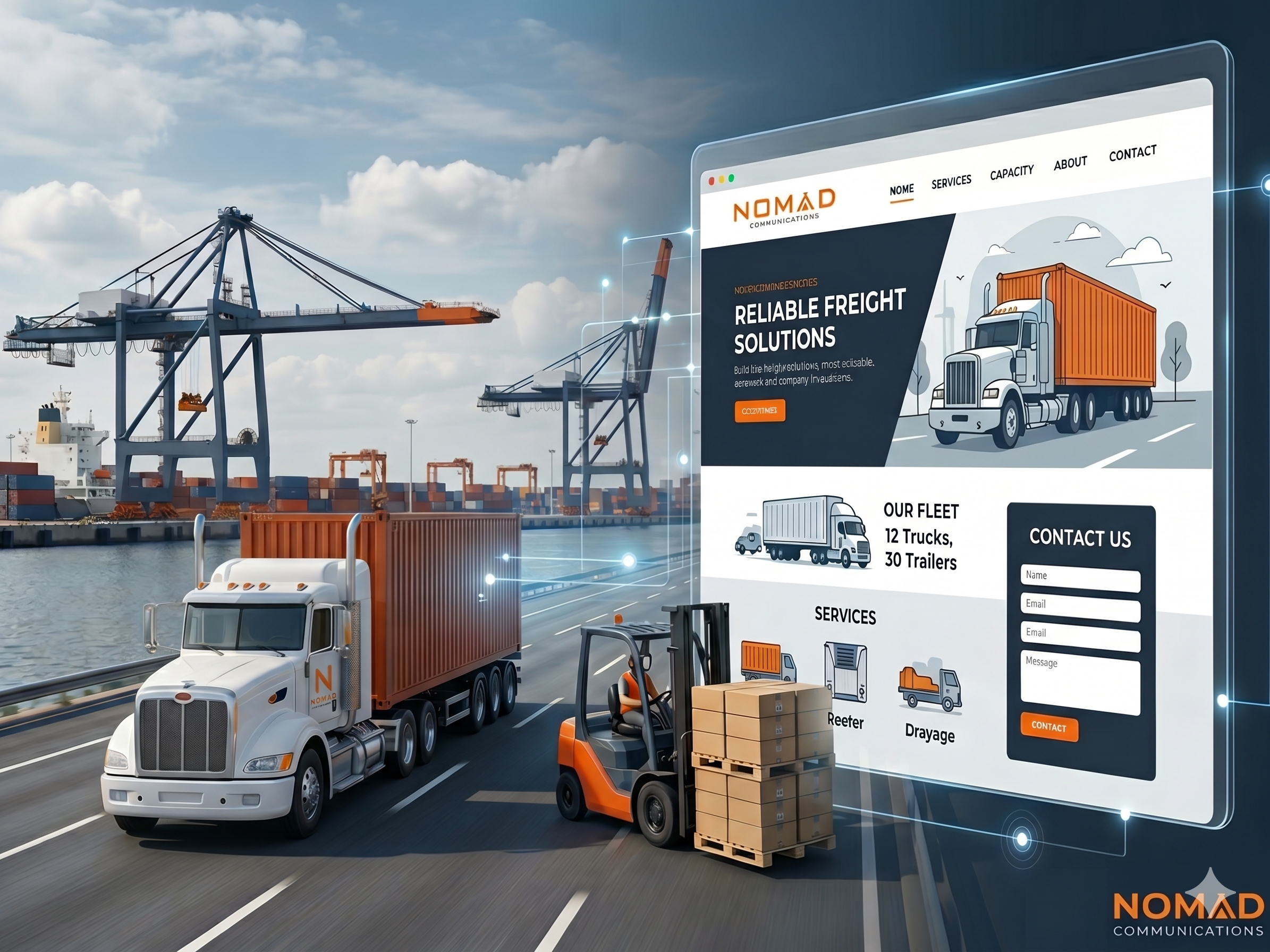
The site doesn’t have to be fancy, and it doesn’t have to cost thousands of dollars. However, it should provide basic information, including:
Capabilities- The types of work you do
Credibility Indicators- Your relevant information (MC number, years in service, SLA performance, etc).
Capacity- The number of assets you have available
And your email domain should match your website address.
Creating Content for Your Website
Obviously, your website will have more than three pieces of information on it, but again, this doesn’t have to be a heavy lift. Start by thinking about what makes you different from other truckers, and then highlight those details. Is it quality of service? Is it the longevity of your drivers? Is it newer equipment? ZEVs? All of these details help to paint a picture of what you want your company to be, and how you want your prospects to perceive you.
All of that information belongs on your website.
Creating Content that Sells
Type your paragraph here
This can be where things get tricky, but you don’t need to purchase any software or equipment to turn your website into a revenue generating machine. Take a few moments to think about how you’d like to be found. What are the keywords that make sense for your business (i.e. if you’re a drayage carrier, then ‘drayage’ is one of the terms to focus on).
Also consider ways to refine the terms (if you’re a drayage carrier that only does work in Norfolk, focus your content on ‘Drayage in Norfolk’). Yes, “drayage carrier” likely has more people searching for it, but if it’s business you can’t serve, there’s no need to compete on those search terms.
Five out of every six trucking companies are failing to go after the market in the way the market is looking for them. By having a website and related email address, you’re separating from your competitors, showing a level of professionalism that can be the difference between ‘included in the bid’ and ‘left out,’ and setting your business up for success.
Later this week, we'll talk about how to turn your LinkedIn profile into a secondary landing page.