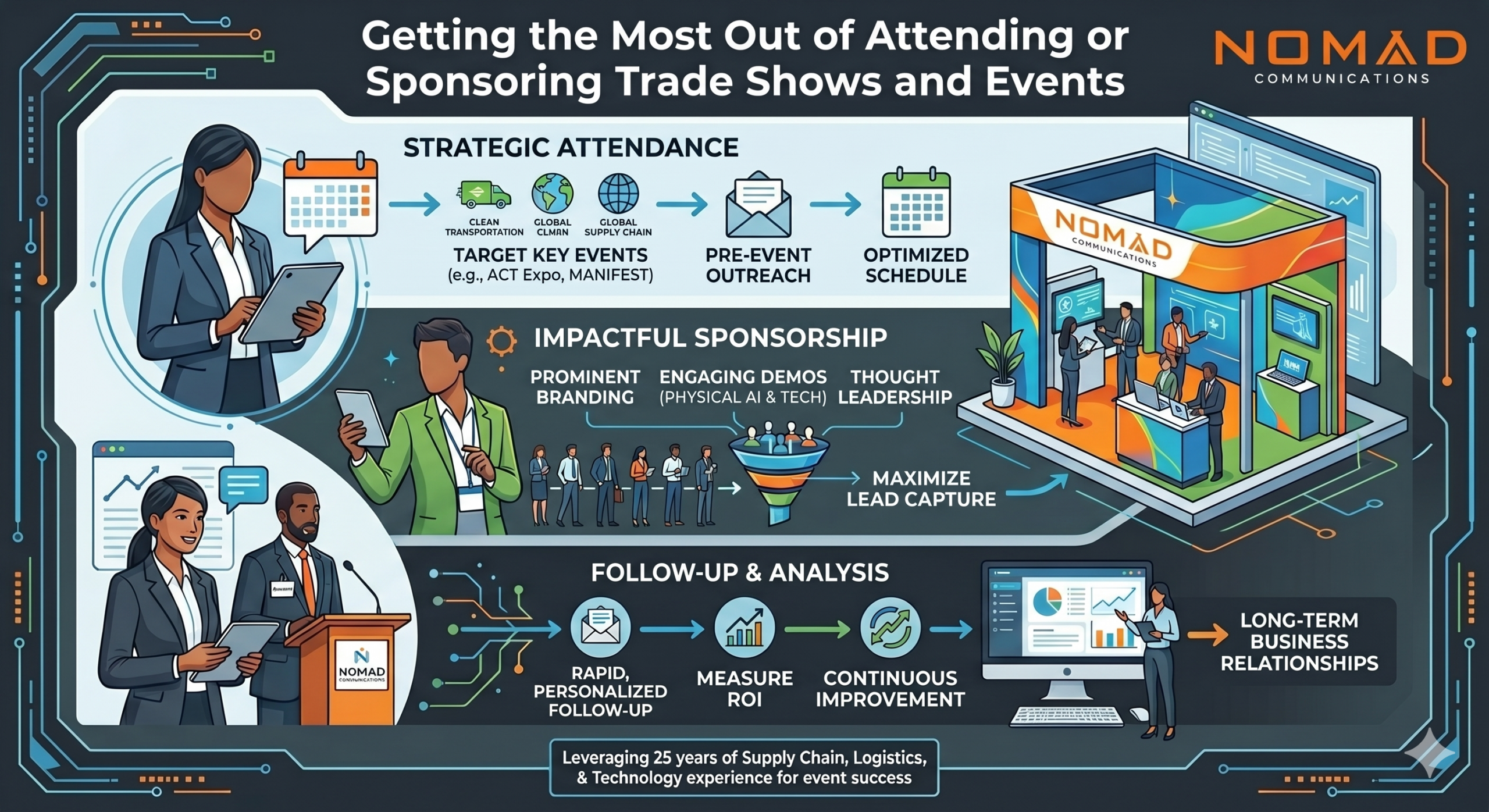
As of this writing, there are more than 60 logistics/supply chain focused trade shows and conferences between now and the end of 2026, each of which would be considered large in scale. At each one of them, companies will bend over backwards to leave opportunities and revenue on the table; don’t let this be you.
Incomplete KPIs
Even simply attending a show is a major investment for any company. There’s travel, registration, room & board, and the person-hours associated with the event. There’s the prep that goes into an event (basics like networking apps, outbound campaigns, decks, SWAG, etc).
However, many companies fail to develop complete KPIs for an event.
One of the challenges faced is Pipeline vs Opportunities. It’s fine to go in with a dollar figure in mind (we want $10M in pipeline), as long as that number is consistent (a long conversation with a premier customer worth that amount can make the show worth it). It’s also great to go in with the mindset of having 15 great conversations with ICPs. Having this metric in place before the show helps to align to ROI, and provides direction for “what matters,” and ROI from events is one of the best ways to grow a business.
However, trade shows offer a ton of ancillary opportunities that should be tracked, such as competitive intelligence (gather info from five competitors), partnership conversations (open three potential partnerships), and media/analyst interviews which leads to the next point;
Lack of Spokespeople
A tremendous way to secure media coverage (and build relationships with reporters covering the space) is to meet at shows. So often, the team manning the booth will decline an interview because they’re “not a proper spokesperson” (or because they’re shy).
In some instances, this can’t be avoided (a public company in a quiet period). Generally speaking, however, the journalism coming out of trade shows isn’t going to be in-the-weeds, it’s going to hit as many highlights of an event as possible. If someone walks over with a press pass on, you can be sure of two things:
The event planner has vetted that person and decided they’re relevant to the same audience you’re talking to.
There’s a good chance they will write about you, and you can use the article in your sales materials.
The Handoff
It’d be easy to discuss relevant follow up timing for leads here, and whether or not every business card makes it into Salesforce. That’s accurate, but most folks know this is a problem. Instead, let’s focus on information asymmetry.
<br></br>
The event attendees are (presumably) in a room full of potential targets, many of whom are discussing their particular pain point. This means the attendee comes out smarter and more informed, but the question is whether information is shared among the group (one smarter employee is great, but a smarter company is even better).
<br></br>
Are notes and information being shared with your product team (those fine individuals building solutions to the problem your ICP just shared)? Is the rest of the sales team gaining insights that apply to their book of business (or book of targets)? Beyond direct leads, information learned at conferences can be used in nearly every sales call/pitch, dramatically increasing the show’s ROI by helping to close more business, more quickly.
<br></br>
Of course, that’s only as long as everyone has access to the information.